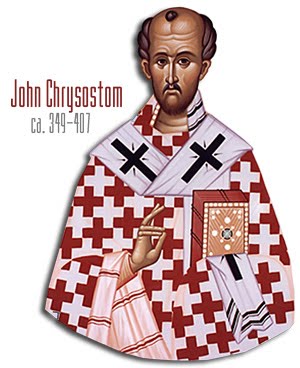
"Ignorance of Scripture is ignorance of Christ." - Jerome

Saturday, March 26, 2011

A Religion of Rescue

For centuries now, there has been a move to understand Christianity more by the religious experience it provides than by its doctrines. We want to feel God, or at least feel better. We want to see our commitment or sobriety or intimacy with God. We want to see our lives here and now improve. The crucifixion of Christ seems like an important, even necessary, event historically, but not anything that needs to be highlighted today. It may be a moving story, but how will it help my work on Tuesday or my marriage tonight?
Yet the neglect of the cross in our churches is the result of more than our growing fascination with the subjective and self-improvement. There is also a growing hostility to the whole notion that Christ suffered as a substitute, that God would desire such a thing, or that God is at all wrathful. Theologians and biblical scholars have reread parts of the Bible - or set it aside - in order to fashion a seemingly more humane religion, a religion of improvement rather than rescue. In such a domesticated version of Christianity, there is no place for a bloody cross.

IT IS WELL - Mark Dever

Monday, March 21, 2011

Law and Gospel - Thesis IV


LAW AND GOSPEL

Thesis IV

Understanding how to distinguish Law and Gospel provides wonderful insight for understanding all of Holy Scripture correctly. In fact, without this knowledge Scripture is and remains a sealed book.

Walther in this rather short lecture on Thesis IV explains that the Bible is indeed a book of great and many contradictions unless you are able to distinguish between its two great doctrines of Law and Gospel.

Example:

In fact, all of Scripture seems to be full of contradictions, worse than the Qur’an of the Turks. Here Scripture pronounces you blessed; there it condemns you. When the rich young ruler asked the Lord, “What good deed must I do to have eternal life?” the Lord replied, “If you want to enter into life, keep the commandments.” When the jailer at Philippi addressed the same question to Paul and Silas, he received this answer:” Believe in the Lord Jesus, and you and your household will be saved.” P.69

The Key to Scripture:

“Do not think that the Old Testament reveals a wrathful and the New Testament a gracious God, or that the Old Testament teaches salvation by a person’s own works and the New Testament salvation by faith. No. We find both teachings in the Old as well as in the New Testament. But the moment we understand how to distinguish between Law and Gospel, it is as if the sun were rising upon the Scriptures, and we behold all the contents of the Scriptures in the most beautiful harmony. We see that the Law was not revealed to us to put a notion into our heads that we could become righteous by it, but to teach us that we are completely unable to fulfill the Law. Then we will know what a sweet message – what a glorious doctrine – the Gospel is and will receive it with exuberant joy. P.70

Thursday, March 17, 2011

Eschatology


New Poll on eschatology shows that 65% of Evangelical leaders are premillenial, 14% are amillenial and 4% are postmillenial (with the rest confused about what eschatology means).

So, I guess that is not about me since I'm not an Evangelical leader (or self-described as Evangelical even) but it is interesting to think that I am a minority (since I am amillenial). I wonder if I am a protected minority group?

Hat Tip: Riddleblog

Saturday, March 12, 2011

What is Worship?


Do we come in worship of God to give or to receive? I think the answer would surprise many filling our churches to discover that true humility lies in the receiving.

Psalm 50:10-15 (emphases mine)
I will not accept a bull from your house or goats from your folds.
For every beast of the forest is mine, the cattle on a thousand hills.
I know all the birds of the hills, and all that moves in the field is mine.
"If I were hungry, I would not tell you, for the world and its fullness are mine.
Do I eat the flesh of bulls or drink the blood of goats?
Offer to God a sacrifice of thanksgiving, and perform your vows to the Most High,
and call upon me in the day of trouble; I will deliver you, and you shall glorify me.

Mark 10:45 For even the Son of Man came not to be served but to serve, and to give his life as a ransom for many."

So yes, come to Church this Sunday to receive the gifts of Christ from his word and sacraments. Come to GET something out of it, and then return the sacrifice of thanksgiving because you were needy and he clothed you in his own righteousness. It's ok to come and drink.

For more check out this great broadcast of Issue Etc.
http://issuesetc.org/2011/03/09/11348/

Wednesday, March 09, 2011

Valley of Vision: Prayer on Confession


"Holy Lord, I have sinned times without number, and been guilty of pride and unbelief, of failure to find Thy mind in Thy Word, of neglect to seek Thee in my daily life. My transgressions and short-comings present me with a list of accusations, but I bless Thee that they will not stand against me, for all have been laid on Christ. Go on to subdue my corruptions, and grant me grace to live above them. Let not the passions of the flesh nor lustings of the mind bring my spirit into subjection, but do Thou rule over me in liberty and power.

I thank Thee that many of my prayers have been refused. I have asked amiss and do not have, I have prayed from lusts and been rejected, I have longed for Egypt and been given a wilderness. Go on with Thy patient work, answering 'no' to my wrongful prayers, and fitting me to accept it. Purge me from every false desire, every base aspiration, everything contrary to Thy rule. I thank Thee for Thy wisdom and Thy love, for all the acts of discipline to which I am subject, for sometimes putting me into the furnace to refine my gold and remove my dross.

No trial is so hard to bear as a sense of sin. If Thou shouldst give me choice to live in pleasure and keep my sins, or to have them burnt away with trial, give me sanctified affliction. Deliver me from every evil habit, every accretion of former sins, everything that dims the brightness of Thy grace in me, everything that prevents me taking delight in Thee. Then I shall bless Thee, God of jeshurun, for helping me to be upright."

-From Valley of Vision

Wednesday, February 16, 2011

Horton: What is the Gospel?


Michael Horton does a great job defining a word that has been so broadly used as to confuse its true meaning:

What is the Gospel?

Monday, February 14, 2011

Law and Gospel - Thesis III

Thesis III
To rightly distinguish Law and Gospel is the most difficult and highest Christian art - and for the theologians in particular. It is taught only by the Holy Spirit in combination with experience.


Well Walther makes the difference between Law and Gospel seem easy. Yet in reality it is hard. In the third thesis he lays out many examples. First example? Everyone:

"But in the end, when Christians have learned to apply the proper distinction between Law and Gospel in the real world, they join St John in saying, 'God is greater than my heart. He has rendered a different verdict on people who sin, and that applies to me as well'. Yet how difficult this is to do! Blessed are you if you have learned this difficult art. But even if you have learned it, do not think you are experts at it. You will always be no more than beginners at this art. There will be days when you will not be able to distinguish Law and Gospel. When the Law condemns you, you must immediately grab hold of the Gospel." Walther - P52


Friday, February 11, 2011

Law and Gospel - Thesis II


Thesis II
"If you wish to be an orthodox teacher, you must present all the articles of faith in accordance with Scripture, yet you must also distinguish Law and Gospel."

"Note this well. When you hear some enthusiast preach, you may say, 'Well, he did preach the truth...' and yet you did not feel satisfied. Here is the key for unlocking this mystery: that particular preacher did not rightly distinguish Law and Gospel, and thus everything went wrong. He preached the truth of the Law where he should have preached the truth of the Gospel, and he offered Gospel truth where he should have presented the Law. Now, anyone following such a preacher will go astray; they will not arrive at the sure foundation of the divine truth; they will not attain the assurance of grace and salvation. This frequently happens when students give sermons. You will hear comforting remarks such as 'It is all by grace,' only to be followed by 'We must do good works,' which are then followed by statements such as 'With our works we cannot gain salvation.' There is no order in such sermons. Nobody understands them - least of all the person who needs one of these two doctrines most."

C.F.W. Walther
(Law and Gospel P38-39)

Wednesday, February 09, 2011

The Need of Preaching the Law


Ever hear the Gospel in a sermon and think (though you would never admit it): So what?

What preceded it in the sermon? Was it historical detail? Was it Greek Grammar 101? Was it a story? Was it practical things we need to do, and perhaps are not doing (watch less tv, give to the church, give to the poor, give to the church, pitch Christianity to your co-workers, did I mention giving to the church) ?


Perhaps we did not hear and savor the Gospel, because the Law was not properly preached. Here's a section from Charles Bridges' work: The Christian Ministry


“We cannot have too much of the Gospel; but we may have too little of the Law. And a defect in the Evangelical preaching of the Law is as clear a cause of inefficient ministration, as a legal preaching of the Gospel. In such a Ministry there must be a want of spiritual conviction of sin generally – of spiritual sins most particularly -and- flowing directly from hence – a low standard of spiritual obedience. Indeed, all the prevalent errors in the Church may be traced to this source. We should never have heard of Methodist perfection – Mystic dependence upon the inward light – Antinomian delusion – inconsistent profession of orthodoxy – Pharisaical self-righteousness – or Pelagian and Socinian rectitude of nature – if the spiritual standard of the law had been clearly displayed, and its convincing power truly left. In the want of this conviction, the fullest perception of Evangelical view must fail in experimental and practical effect.

But there are Antinomian errors on the opposite side. If Antinomianism be the relaxation of obedience from the perfect standard of the law of God, is not mere moral preaching a refined species of this unhallowed leaven? Equally with the professed Antinomian, the standard of the law of God is exchanged for some indefinite and every-varying standard of inclination or caprice. The notions of mercy and salvation, as in the other case, are here used as the palliation of sin. All hope, and no fear – is the character of this preaching. How frightful to think of deluded souls sliding into eternity in this golden dream! And of what vast importance is it for the resistance of error, and for an effective exhibition of divine truth – that our Ministry should be distinguished by a full display of the spiritual character, and unalterable obligations, of the law of God!”

-Charles Bridges - The Christian Ministry. pg. 228-229

Sunday, February 06, 2011

Take your son, your only son Isaac, whom you love...


Genesis 22:1-2 - After these things God tested Abraham and said to him, “Abraham!” And he said, “Here am I.” He said, “Take your son, your only son Isaac, whom you love, and go to the land of Moriah, and offer him there as a burnt offering on one of the mountains of which I shall tell you.”


I am teaching a Sunday School lesson on Genesis 22 and thought I would offer a few thoughts here.

We read this narrative and think:

“How can it be that God would require Abraham to sacrifice his all, his prosperity, his full love of his heart, his treasure, his son?!”

We see Abraham’s detailed meticulous preparation, over a long period of time, readying the sacrifice, preparing for the place and time of the sacrifice of his son for the sin’s of Adam’s race.

Yet, at the last moment, God stays Abraham’s arm and provides a substitute. A male sheep, a ram, a lamb of God.

But the Lamb was not the final substitute. The sacrifices continue throughout the story of the Old Testament.

Finally, when we reach the New Testament, we have a repetition of the themes of Genesis 22:

Genesis 22:2 He said, "Take your son, your only son Isaac, whom you love…

Matthew 3:17 And behold! A voice out of the heaven saying, “This is My Son, my Beloved, in whom I have been delighting.”
_________________________
Genesis 22:6 “And Abraham took the wood of the burnt offering and laid it on Isaac his son. And he took in his hand the fire and the knife. So they went up both of them together.”

John 19:17 and [Jesus] went out, bearing his own cross, to the place called The Place of a Skull, which in Aramaic is called Golgotha.
____________________________
Genesis 22:8 Abraham said, “God will provide for himself the lamb for a burnt offering, my son.” So they went both of them together.

John 1:29 The next day [John] saw Jesus coming toward him, and said, "Behold, the Lamb of God, who takes away the sin of the world!"

____________________________________________

Genesis 22:12b – “for now I know that you fear God, seeing you have not withheld your son, your only son, from me.”

Romans 8:32 He who did not spare his own Son but gave him up for us all, how will he not also with him graciously give us all things?

John 3:16-17 "For God loved the world in this way, that he gave his only Son, that whoever believes in him should not perish but have eternal life. For God did not send his Son into the world to condemn the world, but in order that the world might be saved through him.
_________________________________________
As Tim Keller put it: “And when God said to Abraham, “Now I know you love me because you did not withhold your son, your only son whom you love from me,” now we can look at God taking his son up the mountain and sacrificing him and say, “Now we know that you love us because you did not withhold your son, your only son, whom you love from us.”

We began asking:

“How can it be that God would require Abraham to sacrifice his all, his prosperity, his full love of his heart, his treasure, his son?!”

Now we are wondering:

“How can it be that God would supply what he required of Abraham, to sacrifice His all, His prosperity, His full love of His heart, His treasure, His Son?!”

The story of the Old Testament is God’s detailed meticulous preparation, over a long period of time, readying the sacrifice, preparing for the place and time of the sacrifice of His Son for the sins of Adam’s race.

And can it be that I should gain
An interest in the Savior's blood!
Died he for me? who caused his pain!
For me? who him to death pursued?
Amazing love! How can it be
that thou, my God, shouldst die for me?

Friday, February 04, 2011

What makes a Defective Sermon


Andrew Webb has a great article on the different ways preaching goes wrong:

1. No Law, No Gospel. 2. Law, No Gospel. 3. Gospel, No Law

Three Basic Forms of Defective Preaching

Sunday, January 30, 2011

Law and Gospel - Thesis 1


Thesis I
The doctrinal contents of all Holy Scripture, both of the Old and the New Testament, consist of two doctrines that differ fundamentally from each other. These two doctrines are Law and Gospel.

In his first thesis Walther covers six differences between law and gospel to help the Christian and Christian teachers identify the difference when they read the scripture.
1. They differ as to how they were revealed to humans.
2. They differ regarding their contents.
3. The differ regarding the promises held out by each doctrine.
4. They differ regarding their threats. (Gospel has no threats whatsoever - only words for consolation.)
5. They differ regarding the function and the effect of either doctrine.
6. They differ regarding the persons to whom each of them is to be preached.

This doctrine is important not to skip over in our Christian Churches. As Walther states:
...you can gather how foolish it is-in fact, how terribly deceived so many people obviously are - when they ridicule pure doctrine and say to us, "Enough already with your 'Pure doctrine, pure doctrine'! That can lead only to dead orthodoxy. Focus on pure living instead. That way you will plant the seeds of righteous Christianity." That would be like saying to a farmer, "Stop fretting about good seed! Be concerned about good fruit instead."


So how does pure doctrine of law and gospel together lead to true Christian experience and understanding?
Again Walther:
"The Law tells us what to do and charges us with not having done it, no matter how holy we are. Thus the Law makes us uncertain; it chases us about and thus makes us thirsty. Now when Christ invites those who thirst, He means those who have been crushed under the hammer blows of the Law. These persons Christ invites directly to come to Him; of course, indirectly he invites all people. A person who is thirsting like this only needs to drink-and receive the consolation of the Gospel. When a person is really thirsty and is handed even a small glass of water, how greatly refreshed he feels! But when a person is not thirsty, you can hand him one glass of water after another - it will do him no good; it will not refresh him."

Thursday, January 27, 2011

O Heart Bereaved and Lonely


So Fanny Crosby wasn't always the best in theology. But when she's good, she's great. A hymn I've enjoyed lately, O Heart Bereaved and Lonely. One may enjoy how it incorporates the Incarnation and our Savior's sympathy into our every sorrow. "For we do not have a high priest who is unable to sympathize with our weaknesses, but one who in every respect has been tempted as we are, yet without sin. Let us then with confidence draw near to the throne of grace, that we may receive mercy and find grace to help in time of need. " (Hebrews 4:15-16)

1. O heart bereaved and lonely,
Whose brightest dreams have fled
Whose hopes like summer roses,
Are withered crushed and dead
Though link by link be broken,
And tears unseen may fall
Look up amid thy sorrow,
To Him who knows it all

2. O cling to thy Redeemer,
Thy Savior, Brother, Friend
Believe and trust His promise,
To keep you till the end
O watch and wait with patience,
And question all you will
His arms of love and mercy,
Are round about thee still

3. Look up, the clouds are breaking,
The storm will soon be o'er
And thou shall reach the haven,
Where sorrows are no more
Look up, be not discouraged;
Trust on, whate'er befall
Remember, O remember,
Thy Savior knows it all

Friday, January 14, 2011

The Bible in a Sentence

This was an interesting exercise in summarizing the Bible in one sentence. My favorite was:

Mark Dever:
God has made promises to bring His people to Himself and He is fulfilling them all through Christ.
With honorable mention to

Kevin DeYoung:
A holy God sends his righteous Son to die for unrighteous sinners so we can be holy and live happily with God forever.

And if I might say this, Doug Wilson's answer was the most ridiculous, making the Bible sound like a bad medieval fairy-tale. However, it does illustrate the wackyness of FV guys who seem to want to show off their poetic or symbolic language wrapped in obscure theology:

Doug Wilson:
Scripture tells us the story of how a Garden is transformed into a Garden City, but only after a dragon had turned that Garden into a howling wilderness, a haunt of owls and jackals, which lasted until an appointed warrior came to slay the dragon, giving up his life in the process, but with his blood effecting the transformation of the wilderness into the Garden City.

Wednesday, January 12, 2011

Original Sin, Pastoral Care, and the Courage to Speak Truth


I've met a similar scene multiple times: I enter a room where a mother is holding a small, blanket-wrapped package. The room is thick with grief; the mother crying and the husband with a look of stress on his face. I am there to talk about what they want to do with the remains of their miscarried child. It was in those moments that some of the discussions I had earlier in some seminary classrooms came back to mind, much to my displeasure and a bit to my anger.

In two theology classes, two different professors brought up the subject of infant death and salvation. In both professors, the doctrine of Original Sin loomed large, sufficient to damn from the moment of birth. When asked about infants that die, one replied, “I know you won't like it, but you have to have the courage to say that they are sinful, without faith, and therefore, under any criteria we can measure, condemned.” The argument was that if you allow for one instance of salvation without faith, you are soon on the road to universalism, then atheism, all over the question of if infants that die are damned.

The question I asked then was about 2 Samuel 12, where David's son dies at seven days old (a day before circumcision). When informed of the death, David replies “Can I bring him back again? I shall go to him, but he will not return to me.” (2 Samuel 12:23) I was then informed that was a bad text to use, partly because the son died for David's sin and David was merely talking about the place of the dead, and judgment occurs later, where we would assume they will be parted again with David heading heavenward and the infant, towards damnation. The answer seemed at the time a poor one, for it seemed to dismiss rather than explain the reaction of David. Who would be happy to briefly see their child again before they are ushered off to hell? Was that David's relief?

Here, I stood before a woman and father who had just lost a child, even before seven days. They did not care to hear about my former professor's “courage” in declaring the probable damnation of their child or dismissal of David's source of hope. The pastoral comment I often told believers was, with that most inappropriate text rolling around my mind, was something along the lines of: "though he won't return to be with you, know you will go to meet him someday."

My first professor may not be happy that I used the very text he warned us not to use, but he wasn't in the room. I do remember the same discussion in another class with a bit of a different answer from my other professor. He said faith seems to be what the Scripture always tells us we ought to have to be assured of salvation. Yet, salvation also involves God's election/choice and his grace. This other professor ended the question by saying he wouldn't answer the question definitively, because it wasn't his decision to make. Original Sin is sufficient to damn, God's grace is sufficient to save.

The question seems not to be between “courage” and "weakness" but between presumption and humility. The second seems much more appropriate for pastoral care. It is also where the Westminster Confession comes out where in Ch 10.3 it states: “Elect infants, dying in infancy, are regenerated, and saved by Christ, through the Spirit, who worketh when, and where, and how he pleaseth:” No observable faith is mentioned and I don't think the Westminster Confession is an inclusivist document or on the road to universalism because it allows for salvation without observable faith. God needs no permission or logical justification from us to save whom he will, whether we see faith, or give the child the sign of the covenant.

Indeed, Jesus often seems to welcome children and especially the children of believers well before they have an observable faith by which to respond. Mothers bring, carry even, babies to Jesus to touch/bless (Luke 18:15-17). Fascinating to me is that Jesus did not reject these little heathens. He did not ask the mothers to delay until they had faith and could be proven disciples, but just blessed the babies as these mothers wanted. Would we wish to say that Jesus lacked the courage to correct these mothers in their ignorant theology which valued the children of believers as blessable and valuable, and as belonging to the kingdom of heaven?

David's words about going to his son were spoken before his son was circumcised, before his son had observable faith, and with a hope that was unexplainable if he thought his son to be damned. The same man who declared his culpability from conception (Psalm 51) also declares his hope for his son (2 Samuel 12). And when walking into a room of grieving parents, when being a pastor to those parents that lose children, I can't say that God saves all children. But I can't say God damns them either. I can say: David had a hope, Christ welcomed the children of believers and we are called to trust God's goodness and election. These together give me a strong inclination to share David's hope for the reunion of believers and their departed infant children.

Monday, January 10, 2011

Interrupting these deep thoughts…


…for a really cool picture of C.F.W. Walther.

Saturday, January 08, 2011

Machen on historical Christianity


"If the saving work of Christ were confined to what He does now for every Christian, there would be no such thing as a Christian gospel...It is the connection of the present experience of the believer with an actual historic appearance of Jesus in the world which prevents our religion from being mysticism and causes it to be Christianity.

It must certainly must be admitted, then, that Christianity does depend upon something that happened; our religion must be abandoned altogether unless at a definite point in history Jesus died as a propitiation for the sins of men. Christianity is certainly dependent upon history."

-J. Gresham Machen. Christianity and Liberalism. pg. 120-121

Wednesday, January 05, 2011

Augustine on Psalm 59 (sounding like Luther)


It tickles me that sometimes when reading Augustine, I have to look at the book cover again to remind myself I am not reading Luther. Here is Augustine commenting on Psalm 59:3 "For, lo, they lie in wait for my soul: the mighty are gathered against me"

"There are also other men strong, not because of riches, not because of the powers of the body, not because of any temporally pre-eminent power of station, but relying on their righteousness. This sort of strong men must be guarded against, feared, repulsed, not imitated: of men relying, I say, not on body, not on means, not on descent, not on honour; for all such things who would not see to be temporal, fleeting, falling, flying? but relying on their own righteousness.…“Wherefore,” say they, doth your Master eat with publicans and sinners? (Matt 9:11) O ye strong men, to whom a Physician is not needful! This strength to soundness belongeth not, but to insanity. For even than men frenzied nothing can be stronger, more mighty they are than whole men: but by how much greater their powers are, by so much nearer is their death. May God therefore turn away from our imitation these strong men.…The same are therefore the strong men, that assailed Christ, commending their own justice. Hear ye these strong men: when certain men of Jerusalem were speaking, having been sent by them to take Christ, and not daring to take Him (because when he would, then was He taken, that truly was strong): Why therefore, say they, “could ye not take Him?” And they made answer, “No one of men did ever so speak as He.” And these strong men, “Hath by any means any one of the Pharisees believed on Him, or any one of the Scribes, but this people knowing not the Law?” (John 7:45-49). They preferred themselves to the sick multitude, that was running to the Physician: whence but because they were themselves strong? and what is worse, by their strength, all the multitude also they brought over unto themselves, and slew the Physician of all.…"

And on Verse 10: Behold what is, “My strength, to Thee I will keep:” on myself I will in no ways at all rely. For what good thing have I brought, that thou shouldest have mercy on me, and shouldest justify me? What in me hast Thou found, save sins alone? Of Thine there is nothing else but the nature which Thou hast created: the other things are mine own evil things which Thou hast blotted out. I have not first risen up to Thee, but to awake me Thou hast come: for “His mercy shall come before me.” Before that anything of good I shall do, “His mercy shall come before me.”

Saturday, December 25, 2010

Christmas thought from Athanasius


"The achievements of the Saviour, resulting from His becoming man, are of such kind and number, that if one should wish to enumerate them, he may be compared to men who gaze at the expanse of the sea and wish to count its waves. For as one cannot take in the whole of the waves with his eyes, for those which are coming on baffle the sense of him that attempts it; so for him that would take in all the achievements of Christ in the body, it is impossible to take in the whole, even by reckoning them up, as those which go beyond his thought are more than those he thinks he has taken in.

Better is it, then, not to aim at speaking of the whole, where one cannot do justice even to a part, but, after mentioning one more, to leave the whole for you to marvel at. For all alike are marvellous, and wherever a man turns his glance, he may behold on that side the divinity of the Word, and be struck with exceeding great awe."

Athanasius, On the Incarnation of the Word. ch 54, 4-5 (free version here, buy here)

Tuesday, December 14, 2010

We're All Judaizers Now (?)


"So the error of the Judaizers is a very modern error indeed, as well as a very ancient error. It is found in the modern Church wherever men seek salvation by "surrender" instead of by faith, or by their own character instead of by the imputed righteousness of Christ, or by "making Christ master in the life" instead of by trusting in His redeeming blood. In particular, it is found wherever men say "the real essentials" of Christianity are love, justice, mercy and other virtues, as contrasted with the great doctrines of God's Word. These are all just different ways of exalting the merit of man over against the Cross of Christ, they are all of them attacks upon the very heart and core of the Christian religion. And against all of them the mighty polemic of this Epistle to the Galatians is turned."

-J. Gresham Machen (Commentary on Galatians)

[Hat Tip: Nick Batzig]